Chapter 01 : Introduction to Chemistry
| Introduction Chemistry is fundamental to our world. It has a variety of roles and impacts on several aspects of life, including food, medicine, manufactured products, advancement of technology, and the environment. In this chapter, you will learn about the concept of chemistry, the relationships of chemistry with other related disciplines, and applications of chemistry in the development of a modern society. The competencies developed will enable you to apply chemistry skills, theories and principles to solve daily life challenges. |
| Think The contributions of chemistry in various aspects of life. |
Concept of chemistry
Task 1.1
- Use reliable online sources to search for images or pictures of various materials produced by chemical processes and identify those commonly found in your environment.
- Examine the properties such as colour, size and physical state of the materials.
- Watch animated videos illustrating the composition of chalk, soft drinks or water, and how water undergo changes from liquid to solid state.
- Explain the meaning of chemistry based on the task performed.
Chemistry is a branch of science that deals with the composition, structure and properties of matter, and the changes that matter undergoes.
Matter is anything that has mass and occupies space. It includes the materials or substances of nature which make up our environment.
Chemistry is divided into different areas such as analytical chemistry, inorganic chemistry, organic chemistry, physical chemistry, chemical engineering and biochemistry. Analytical chemistry deals with the studies of instruments and methods used to separate, identify, and quantify chemical species in matter. Inorganic chemistry deals with properties and behaviour of inorganic compounds. Organic chemistry deals with properties and behaviour of organic compounds. Physical chemistry is concerned with the relations between the physical properties of substances and their chemical composition and transformations. Chemical engineering deals with operations, designs and methods of improving production. Biochemistry deals with the study of chemical processes that occur in living things.
The people who study chemistry are called chemists. Since chemistry is a science that involves experiments and practical work, chemists must acquire scientific skills to successfully obtain facts and verify them.
These skills include:
- Making thorough observations;
- Recording accurately what has been observed;
- Organising the observed and recorded information;
- Repeating tests to ensure observations are accurate;
- Drawing conclusion from observations; and
- Predicting possible outcomes of similar experiments.
Therefore, chemistry students should apply these skills to be able to think logically and critically.
Relationships of chemistry with other related disciplines
| Task 1.2 Conduct a library and internet search on the relationships between chemistry and other related disciplines and prepare a report. |
Chemistry is not an isolated discipline, because it is related to other disciplines such as biology, physics, agriculture, geology, environmental sciences and mathematics. Studying the relationships of chemistry with other related disciplines is important as it helps to understand the world around us and give insight to physical, chemical and biological processes. It also provides useful integrated skills and acts as a foundation for understanding scientific skills through researching different phenomena. Furthermore, the relationships of chemistry with other related disciplines help to understand different professions resulting from learning chemistry. A person studying chemistry with other disciplines may become a medical doctor, pharmacist, nurse, chemical analyst, laboratory technician, laboratory scientist, researcher, chemical engineer, teacher and environmentalist. This means chemists find employment opportunities in hospitals, pharmaceutical industries, research centres, teaching laboratories, schools, engineering sectors, chemical industries, food processing industries, biotechnology firms and other manufacturing industries.
The following are some disciplines which are related to chemistry:
Biology
Chemistry and biology are closely related disciplines. These disciplines converge in biochemistry and biotechnology fields. Biochemistry explores the chemical processes that occur within living organisms for understanding biological systems. On the other hand, biotechnology is the use of living organisms to produce economically useful products. These products are produced by integrating the knowledge and skills from chemistry, biology and chemical engineering. Therefore, the relationships of these disciplines bring development that resolves daily life challenges related to agriculture, medicine, nutrition and environmental science.
Physics
Chemistry has a strong interrelation with physics and forms the foundation for understanding the physical world and the behaviours of matter. Chemistry and physics converge in physical chemistry. This field drives innovations and technological advancements in various areas such as medical instruments, materials science and products from manufacturing industries.
Agriculture
Chemistry is closely related to agriculture through agro-chemistry. Agro-chemistry examines the chemical processes related to plants, animals and soil health, crop protection and fertilisers. This field helps in ensuring food availability and security as well as good agricultural practices which enhance the quality of agricultural products.
Geology
Chemistry and geology disciplines integrate through geochemistry field. This field applies chemistry theories and principles in exploring the chemical composition and processes of Earth and other planets. Geochemists use their expertise in investigating the abundance and distribution of chemical elements in rocks and minerals which is the foundation of mining industry.
Environmental Sciences
Environmental chemistry and atmospheric chemistry are among the fields which provide relationships between chemistry and environmental science. These fields apply chemistry theories and principles to study the interactions of chemicals in the environment, including pollution and their impacts to the natural world.
Mathematics
Mathematics is applied in almost all areas of chemistry including physical chemistry, analytical chemistry, inorganic chemistry, organic chemistry and biochemistry. It serves as a powerful tool for various aspects of chemistry such as analysis of chemical processes that involve interactions and changes of matter, and the interpretation of experimental data through statistical analysis which may be used to draw conclusions in chemistry experiments. It is also applied in measuring mass, volume, temperature and concentration of chemical substances, calculating percentage and ratios that express concentrations, composition and yields of chemical reactions as well as computational chemistry which uses mathematics to simulate chemical processes, predict structures and calculate properties of chemical systems.
The relationships of these disciplines make meaningful contributions for advancement of the chemistry related fields such as medicines, pharmacy, agriculture and environmental chemistry. Therefore, mathematics allows individuals to conduct precise experiments, make predictions and develop deep understanding on the principles governing the behaviours of matter.
Applications of chemistry in the development of a modern society
Project
Visit a nearby manufacturing industry, health facility, mining site or agricultural farm to identify materials produced through chemical processes, study the practical applications of chemistry in the development of modern society, and prepare a report.
Chemistry plays a significant role in the development of a modern society. It is applied in a wide range of industrial processes and daily life activities. It has influenced most aspects of life including healthcare, energy production and environmental sustainability. The quality of life for most people worldwide has improved due to practical applications of chemistry. Many of the products that are obtained by the applications of chemistry are useful for development of modern societies. These products are processed in different areas such as agriculture, medicine, nutrition and cooking, and manufacturing industries.
Agriculture
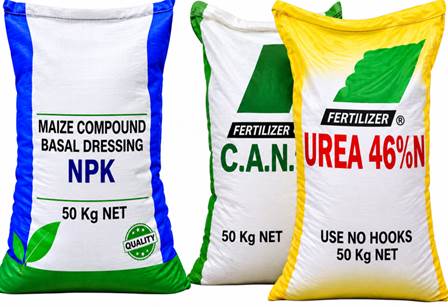
Agriculture is the practice of growing crops and keeping animals. Farmers use many products made through chemical processes to obtain better agricultural yields. These products include fertilisers, pesticides, animal vaccines and processed animal feeds. Fertilisersare used to improve the quality and quantity of crops. Some of the fertilisersare shown in Figure 1.1.
|
Figure 1.1: Fertilisers |
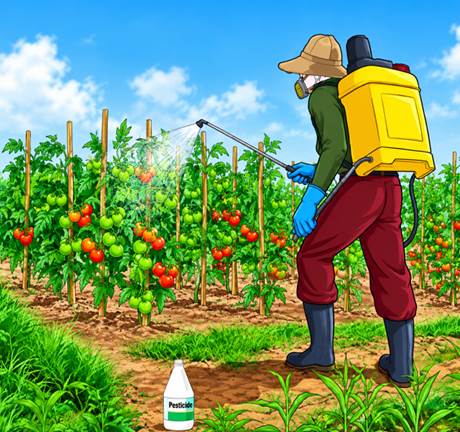
Pesticides are used to destroy or control pests harmful to crops, animals, or their products. Pesticides are sprayed or sprinkled on crops to destroy pests. Figure 1.2 shows a farmer spraying pesticides on the crops.
|
Figure 1.2: Spraying pesticides on the crops |
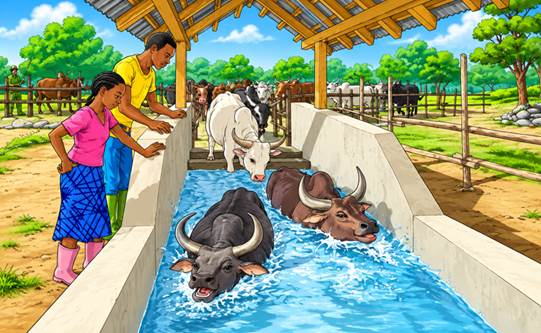
Pesticides are also used in animal dips (Figure 1.3) to kill pests such as ticks that attack animals.
|
Figure 1.3: Animal dip |
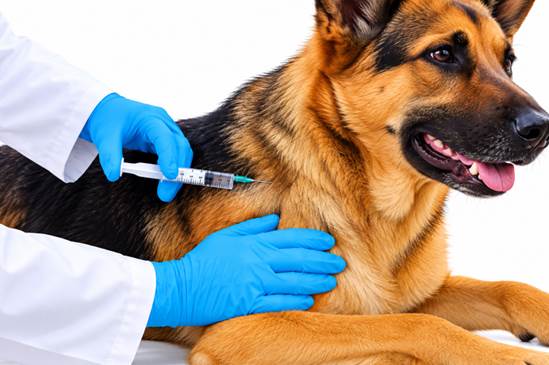
Animal vaccines are used to protect animals against various infectious diseases. They are also important in preventing the transmission of diseases between domesticated animals and human beings. Figure 1.4 shows a dog being vaccinated.
|
Figure 1.4: Vaccinating a dog |
Medicines
The field of medicine ensures our well-being through the prevention and treatment of diseases. Chemically produced substances in the forms of vaccines and medicines are used in this field. Medicines are found in medical stores and pharmacies. Some medicines are shown in Figure 1.5.
|
Figure 1.5: Medicines in a pharmacy |

Nutrition and cooking
Chemistry has an impact on the tastes, textures and nutritional value of food. Understanding chemistry helps in identification of different food components including carbohydrates, proteins, fats and oils, vitamins and minerals. Chemical reactions involved in cooking help to have foods that are healthy and palatable. The reactions taking place during cooking bring impact on the taste and texture of the food. For example, chemical processes are useful in the preparation of baked foods such as bread, cakes, rock buns and biscuits (Figure 1.6).
|
Figure 1.6: Examples of baked foods |

Manufacturing industries
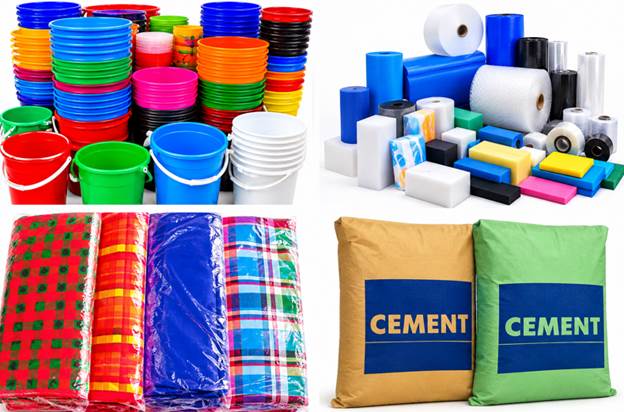
Manufacturing industries such as textile, chemical, paper, food and beverage, transport industries, communication, plastic manufacturing, and construction materials industries rely heavily on chemical processes. Most of the machine parts are made of metals, plastics and rubber. These materials are produced through chemical processes. Raw materials from different sources are also processed chemically to obtain products. Examples of such products are cement, plastic containers, fabrics, chemicals, rubber and paper. Figure 1.7 shows some of the products manufactured using various chemical sources and processes.
|
Figure 1.7: Some of the products from the manufacturing industries |
Food and beverage industries
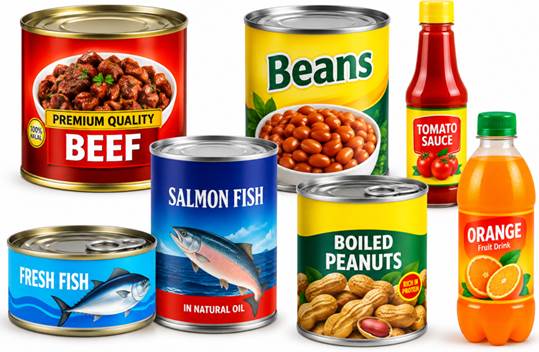
The food and beverage industries have benefited greatly from chemical processes and products. Among these processes is the preservation of foods, especially canned or bottled. Chemicals commonly used as food preservatives are common salt, sodium nitrite, citric acid, sodium benzoate and alcohol. Chemically preserved foodstuffs last longer than those unpreserved. Some foods which are preserved using chemicals are shown in Figure 1.8.
|
Figure 1.8: Canned and bottled foods |
Transport
Fuels and lubricants used in motor vehicles, aircraft, motorcycles, ships and other means of transportation are produced by chemical processes. Their parts such as engines, batteries and tyresare made through chemical processes. Other materials such as seals, plastics, paints, coolants, carpets and seat covers found in the means of transportation are also made through chemical processes. Figure 1.9 shows a car engine and its associated parts made through the application of chemistry.
|
Figure 1.9: Car engine and its associated parts |

Communication and technology
Chemistry plays a significant role in communication and technology, from the development of batteries and electronic devices to the transmission of data through various networks. Applications of chemistry principles give impact on innovation and advancement of technology. It also improves communication and brings entertainment. Newspapers and magazines are written using papers and ink that are manufactured through chemical processes. Telephones, radios, televisions, and computers rely much on wires, batteries, chemicals and other materials that are chemically manufactured. Figure 1.10 indicates some of the communication media whose components are made by chemical processes.
|
Figure 1.10: some of the communication media |

Home care products and cosmetics
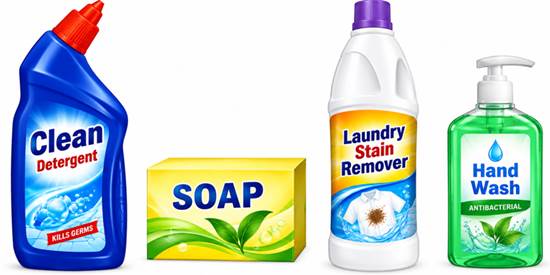
Home care products are chemically made materials used to clean the home and its surroundings, making them more comfortable to live in while ensuring effective hygiene and personal care. These products include soaps, detergents, air fresheners and polish. Some of the home care products are shown in Figure 1.11.
|
Figure 1.11: Examples of home care products |
Cosmetics are also produced chemically. They are used to improve one’s physical appearance or odour. Such products include deodorants, lotions, lipsticks and foundation creams (Figure 1.12).
|
Figure 1.12: Examples of cosmetics |

Exercise
1. Using examples of chemical substances, explain how chemistry is commonly applied in your community.
2. How do the chemistry skills contribute to the understanding of environmental science field?
3. How does chemistry influence the development of a modern society?
Answers
1. Using examples of chemical substances, explain how chemistry is commonly applied in your community.
Chemistry is commonly applied in the community in many ways, including:
(i) Agriculture: Fertilizers such as urea and ammonium nitrate are used to provide nutrients needed for plant growth. Pesticides are also used to control harmful insects and diseases.
(ii) Medicine and health: Chemical substances are used to manufacture medicines such as antibiotics, painkillers and antiseptics for preventing and treating diseases.
(iii) Water treatment: Chemicals such as chlorine are used to kill harmful microorganisms and make water safer for domestic use.
(iv) Food preparation and preservation: Substances such as salt, sugar and approved preservatives are used to preserve food and improve its quality.
(v) Cleaning: Soap, detergents and disinfectants contain chemical substances used for cleaning clothes, utensils, houses and other surfaces.
(vi) Construction: Materials such as cement, lime, paints and adhesives involve chemical substances and chemical processes used in construction.
2. How do the chemistry skills contribute to the understanding of environmental science field?
Chemistry skills contribute to environmental science in the following ways:
(i) Identifying pollutants: Chemistry helps to identify chemical pollutants in air, water and soil.
(ii) Water-quality analysis: Chemical tests can determine substances such as acids, salts and other contaminants present in water.
(iii) Understanding chemical reactions: Chemistry helps to explain processes such as decomposition, oxidation and acid rain that affect the environment.
(iv) Waste management: Knowledge of chemistry helps in understanding how chemical wastes can be treated, recycled or safely disposed of.
(v) Soil analysis: Chemical knowledge is used to determine soil properties and nutrient levels, which helps in environmental conservation and agriculture.
(vi) Pollution control: Chemistry helps scientists develop methods and materials for reducing pollution and treating contaminated environments.
3. How does chemistry influence the development of a modern society?
Chemistry influences modern society through:
(i) Medicine: Chemistry contributes to the development of medicines, vaccines, disinfectants and other health-care products.
(ii) Agriculture: Fertilizers, pesticides and other agricultural chemicals help improve crop production and protect crops.
(iii) Technology and industry: Chemistry contributes to the manufacture of plastics, glass, metals, batteries, electronic materials and other industrial products.
(iv) Energy: Chemistry is important in fuels, batteries and other technologies used to produce and store energy.
(v) Food technology: Chemistry helps in food processing, preservation, packaging and quality control.
(vi) Construction: Chemical knowledge contributes to the development of cement, paints, ceramics, glass and other construction materials.
(vii) Environmental protection: Chemistry helps develop methods for water purification, waste treatment and pollution control.
Conclusion: Chemistry is an important field of science because it helps society understand substances and their changes and apply this knowledge in health, agriculture, industry, environmental protection and everyday life.
Chapter summary
1. Chemistry is a branch of science that deals with the composition, structure and properties of matter, and the changes that matter undergoes.
2. The people who study chemistry are called chemists.
3. Chemists use various theories and principles from chemistry and other related disciplines including biology, physics, agriculture, geology, environmental science and mathematics to understand the world around us and give insight to physical, chemical and biological processes.
4. The skills acquired in chemistry and other related disciplines can enable a person to develop different professions such as medical doctor, pharmacist, chemical analyst, chemical engineer, teacher, laboratory technician, laboratory scientist, environmentalist, nurse, biotechnologist and researcher.
5. A lot of materials are made through the application of the knowledge, skills and principles of chemistry. The materials include soaps and detergents, foods and drinks, medicines, fuels and cosmetics.
6. Chemistry is important because it is applied in many areas such as agriculture, medicines, food and beverage industries, home care and cosmetics industries, research, transport, and communications and technology. Therefore, the applications of chemistry in these areas assist in the development of modern society.
www.learninghubtz.co.tz
Revision exercise
1. Choose the correct answer in items (i-x).
(i) Which area of chemistry deals with methods used to separate, identify and quantify chemical species in matter?
- Organic chemistry
- Analytical chemistry
- Biochemistry
- Inorganic chemistry
(ii) Which branch of chemistry studies chemical processes that occur in living things?
- Physical chemistry
- Biochemistry
- Geochemistry
- Chemical engineering
(iii) The relationship between chemistry and agriculture is mainly represented by:
- agro-chemistry
- geochemistry
- biochemistry
- physical chemistry
(iv) Which field applies chemistry theories and principles to study chemical interactions in the environment, including pollution?
- Environmental chemistry
- Organic chemistry
- Inorganic chemistry
- Biochemistry
(v) Which of the following is a chemical product used in agriculture?
- Fertiliser
- Sand
- Stone
- Timber
(vi) If a Form One student aspires to be a professional farmer, which among the following subjects a student should be advised to focus on in order to develop the necessary competencies?
- Geography, physics and chemistry
- Biology, physics and mathematics
- Agriculture, chemistry and biology
- Chemistry, physics and biology
(vii) Imagine that you are playing a chemistry-related trivia game with your friends. If you are to choose one term which does not relate to any recognised branches of chemistry among the following, which term could you choose?
- Organic chemistry
- Arithmetic chemistry
- Inorganic chemistry
- Physical chemistry
(viii) What are some of the main purposes of vaccines as chemical substances?
- Cure animals and human beings from diseases.
- Protect animals and human beings from diseases.
- Introduce vitamins and proteins in animals.
- Make animals grow faster than normal.
(ix) Which of the following terms refer to a person with specialised knowledge and expertise in the field of chemistry?
- Alchemist
- Chemistry
- Chemist
- Pseudo-chemist
(x).A person at home can apply chemistry in:
- playing games.
- watching television.
- cooking food in a kitchen.
- dusting the floor in a house.
2. Match the items in List A with the correct responses in List B. (5 marks)
| List A | List B |
|---|---|
|
|
3. Explain how chemistry principles are used in making water clean and safe.
4. What is the role of chemistry in overcoming health problems?
5. Use relevant examples to support the statement, “agriculture and chemical industry can work together rather than separate”.
6. In what ways have modern societies benefited from chemistry through communication and advancement of technology?
7. How does the application of chemistry contribute to a clean environment?

Hub App
 For Call,Sms&WhatsApp: 255769929722 / 255754805256
For Call,Sms&WhatsApp: 255769929722 / 255754805256  MATOKEO YA KIDATO CHA VI 2026
SECONDARY REGIONAL EXAMS
PRIMARY REGIONAL EXAMS
FORM VI NECTA REVIEWS
FORM IV NECTA REVIEWS
FORM II NECTA REVIEWS
STD VII NECTA REVIEWS
STD IV NECTA REVIEWS
SECONDARY EXAMS SERIES
PRIMARY EXAMS SERIES
PRIMARY SUBJECT NOTES
SECONDARY SUBJECT NOTES
SECONDARY TOPICAL EXAMS
SECONDARY TOPICAL QUESTIONS
PRIMARY TOPICAL QUESTIONS
PRACTICAL EXAMS & NOTES
SECONDARY REGIONAL EXAMS
DOWNLOAD SUBJECT NOTES
SCHEMES OF WORK (PRIMARY & SECONDARY)
LESSON PLAN
SECONDARY LOG BOOKS
PRIMARY LOG BOOKS
LITERARY WORKS / UCHAMBUZI VITABU
METHALI ZOTE ZA KISWAHILI
Vitendawili Vya Kiswahili
FORM VI RESULTS 2024
FORM FIVE SELECTION 2024
Matokeo KIDATO CHA II 2024
Matokeo Darasa IV 2024
MATOKEO KIDATO CHA IV 2023
FORM ONE SELECTION 2024
FORM VI RESULTS 2023
Matokeo Darasa IV 2022
MATOKEO YA KIDATO CHA VI 2026
SECONDARY REGIONAL EXAMS
PRIMARY REGIONAL EXAMS
FORM VI NECTA REVIEWS
FORM IV NECTA REVIEWS
FORM II NECTA REVIEWS
STD VII NECTA REVIEWS
STD IV NECTA REVIEWS
SECONDARY EXAMS SERIES
PRIMARY EXAMS SERIES
PRIMARY SUBJECT NOTES
SECONDARY SUBJECT NOTES
SECONDARY TOPICAL EXAMS
SECONDARY TOPICAL QUESTIONS
PRIMARY TOPICAL QUESTIONS
PRACTICAL EXAMS & NOTES
SECONDARY REGIONAL EXAMS
DOWNLOAD SUBJECT NOTES
SCHEMES OF WORK (PRIMARY & SECONDARY)
LESSON PLAN
SECONDARY LOG BOOKS
PRIMARY LOG BOOKS
LITERARY WORKS / UCHAMBUZI VITABU
METHALI ZOTE ZA KISWAHILI
Vitendawili Vya Kiswahili
FORM VI RESULTS 2024
FORM FIVE SELECTION 2024
Matokeo KIDATO CHA II 2024
Matokeo Darasa IV 2024
MATOKEO KIDATO CHA IV 2023
FORM ONE SELECTION 2024
FORM VI RESULTS 2023
Matokeo Darasa IV 2022
WHATSAPP US NOW FOR ANY QUERY
App Ya Learning Hub Tanzania