Candidate's Examination Number . . . . . . . . . . . . .
THE UNITED REPUBLIC OF TANZANIA NATIONAL EXAMINATIONS COUNCIL
FORM TWO SECONDARY EDUCATION EXAMINATION, 2013
0032 CHEMISTRY
Time: 2½ HOURS
INSTRUCTIONS
This paper consists of sections A, B and C. Answer ALL questions. Write your examination number at the top right corner of every page. ALL writing must be in black or blue ink EXCEPT diagrams which must be in pencil.Cellphones and calculators are not allowed in the examination room. The following atomic masses may be used: H = 1, O = 16, C = 12, Na = 23, S = 32, Ca = 40 FOR EXAMINER'S USE ONLY
QUESTION NUMBER SCORE INITIALS OF EXAMINER 1 2 3 4 5 6 7 8 9 10 TOTAL
SECTION A (10 MARKS)
1. Write the letter of the correct answer in the box provided for each of the following items:
(i) The apparati used for grinding granular chemicals in the laboratory include:
crucible and watch glass mortar and pestle pestle and pair of tongs spatula and basin. Choose Answer :
- -
A
B
C
D
E
(ii) The substances that can be used to extinguish fire are:
carbon dioxide and sand carbon dioxide and sugar nitrogen and sand nitrogen and water. Choose Answer :
- -
A
B
C
D
E
(iii) Which of the following electronic configurations are of metals?
2:8:1 and 2:5 2:8:2 and 2:6 2:8:3 and 2:8:8:1 2:8:6 and 2:8:8:7 Choose Answer :
- -
A
B
C
D
E
(iv) When sugar is dissolved in water, a uniform mixture is formed. The resulting mixture is called a:
solute solution solvent suspension. Choose Answer :
- -
A
B
C
D
E
(v) Flammable chemicals are those which:
burn skin catch fire easily explode extinguish fire. Choose Answer :
- -
A
B
C
D
E
(vi) Which of the following can be classified as a renewable source of energy?
Biomass Coal Coke Petroleum Choose Answer :
- -
A
B
C
D
E
(vii) The part of the Bunsen burner that controls the amount of air coming in is called:
air hole barrel collar jet. Choose Answer :
- -
A
B
C
D
E
(viii) An element X with atomic number 16, belongs to:
period 3, group III, valency of 2 period 3, group VI, valency of 2 period 3, group VI, valency of 6 period 6, group VI, valency of 6 Choose Answer :
- -
A
B
C
D
E
(ix) The simplest formulas of a compound formed when combining 13g of aluminium and 17g of chlorine is:
AlCl Al2 Cl Al3 Cl2 AlCl3 Choose Answer :
- -
A
B
C
D
E
(x) The second step in the scientific procedure is:
data collection and analysis data interpretation experimentation and observation hypothesis formulation Choose Answer :
- -
A
B
C
D
E
SECTION B (20 MARKS)
2. Match each item in List A with a correct response in List B by writing its letter below the number of the corresponding item in the table provided.
LIST A LIST B Ability of an atom to gain or attract electrons towards itself. Addition of oxygen to or removal of hydrogen from a substance. A substance which behaves in three states of matter Bond formed between two atoms due to sharing of two electrons from each other. Combining power of an element Liquids which form layers when mixed Reddish brown coating on metals Supports burning of substances The number of electrons in the outermost shell Treatment and purification of water for human uses Chlorination Covalent Electronegativity Electropositivity Evaporation Groups Ionic Kerosene and water Oxidation Oxygen Reduction Rust Sugar and alcohol Valency Water
View Ans 3. (a) What do you understand by the following terms?
Empirical formula Relative atomic mass View Ans (b) A certain compound K contains 15.8% carbon and 84.2% sulphur. The molar mass of K is 76 g/mol. Determine its:
simplest formula molecular formula View Ans 4. (a) What do you understand by the following terms?
Flame Bunsen Burner Laboratory View Ans (b) List four properties of each of the following:
A luminous flame A non-luminous flame View Ans (c) Write the chemical formula for each of the following compounds:
Sodium carbonate Calcium nitrate Ammonium chloride View Ans 5. (a) Calculate the percentage by composition of the underlined elements in the following compounds:
Na2 S O4 Ca (HCO3 )2 View Ans (b) Give the use of each of the following components which are found in the First aid kit:
Plaster A pair of scissors Cotton wool Gloves View Ans (c) Categorize the following changes as either chemical or physical:
Freezing of juice in a bottle Rusting of iron Burning of wood Drying of wet clothes View Ans 6. (a) Define the following terms:
Chemistry Element Catalyst View Ans (b) Give three differences between the following:
Compound and mixture Suspension and solution View Ans 7. (a) The figure below shows the relationship among three states of matter. Name the processes involved in A, B, C and D.
View Ans (b) State the valency of the following atoms:
Aluminium Neon Sulphur Potassium View Ans (c) Give the chemical formula for the combination of the following sets of ions:
Mg2+ , PO4 3- Fe3+ , SO4 2- View Ans 8. (a) Write a word equation for each of the following reactions:
Calcium burns in oxygen Sodium reacts with water (b) What do you understand by the following terms?
Water treatment Water purification (c) Mention six uses of water in economic activities
View Ans 9. Gas “L” has the following properties: It is highly flammable, readily combines with other elements, readily reacts with other chemical substances and is a strong reducing agent.
(a) Name the gas “L”
(b) What is the method used to collect gas “L” in the laboratory? Give a reason.
Method ______________________ Reason ______________________ (c) Give four uses of gas “L”.
View Ans 10. (a) Mention four chemical properties of Oxygen.
(b) Find the oxidation number of each of the underlined elements in the following:
KClO3 Cr2 O7 2- (c) Use the IUPAC system to name each of the following chemical compounds:
CuO CaSO4 HNO3 ZnCl2 View Ans 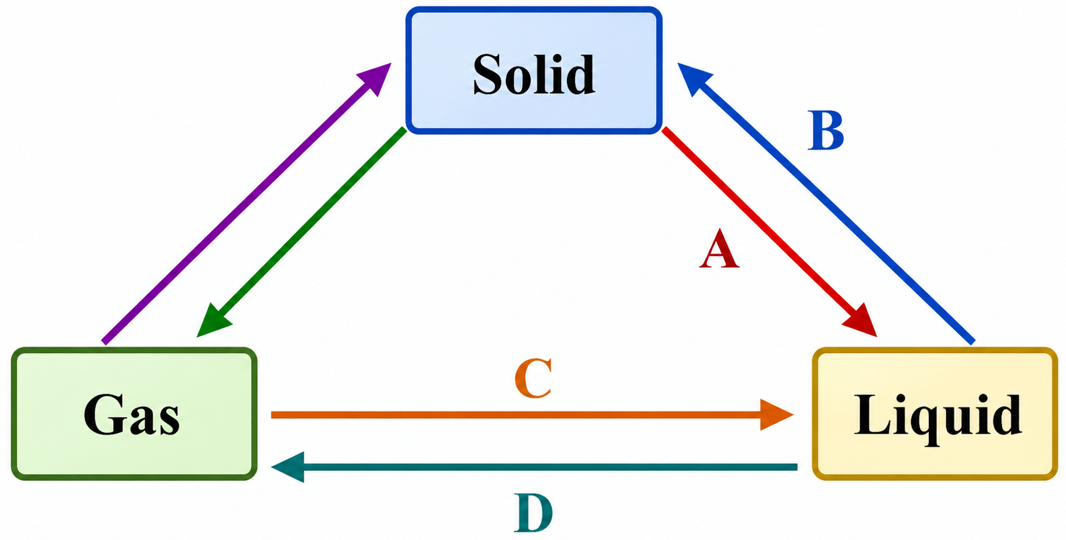

 For Call,Sms&WhatsApp: 255769929722 / 255754805256
 MATOKEO YA KIDATO CHA VI 2026